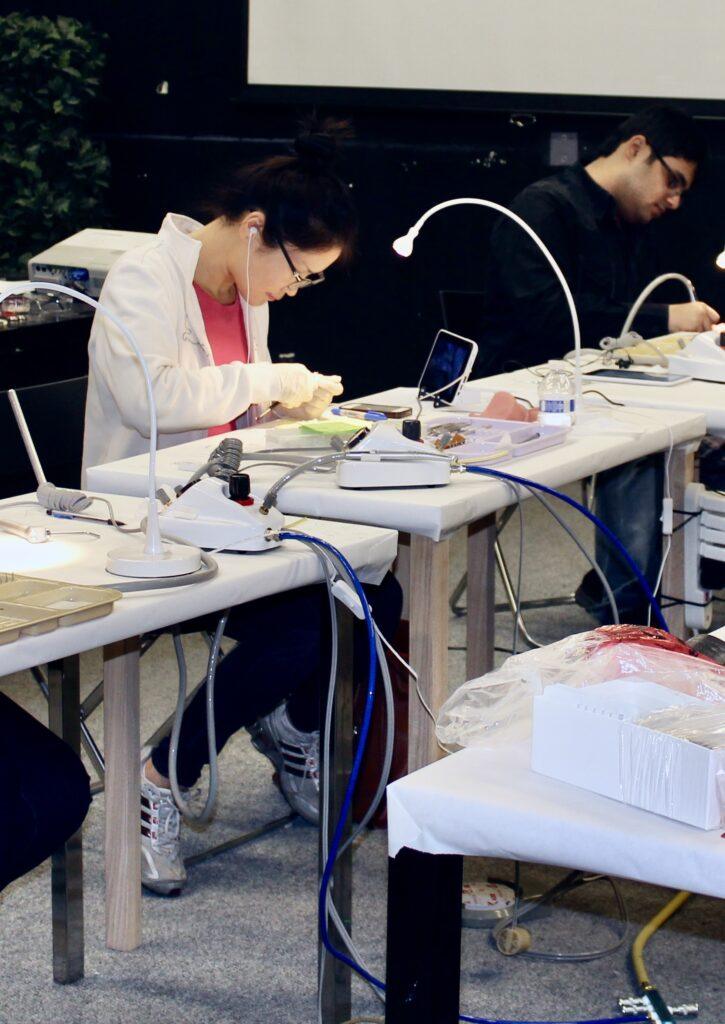
For an international dentist, the bench test is often one of the most stressful parts of applying to advanced standing programs. If you are wondering how to pass dental bench test exercises consistently, start by learning the mistakes that most often lead to a failed preparation.
In this guide, we break down five common mistakes and practical fixes for each. One important note: every program writes its own bench test criteria, so always follow the instructions and measurements your target school provides.
Table of Contents
Start With Ergonomics and Your Practice Setup
Before you think about a Class II preparation or a full gold crown, look at your posture. Many technical errors, such as sloping floors or over-tapered walls, come from poor positioning and visualization rather than a lack of hand skill.
If you hunch over the typodont, your view of the long axis of the tooth becomes distorted, and you start tilting the handpiece to see better. Sit upright, position the manikin so you can see the preparation clearly, and consider magnification that lets you spot rough margins.
Practice Like It Is the Real Exam
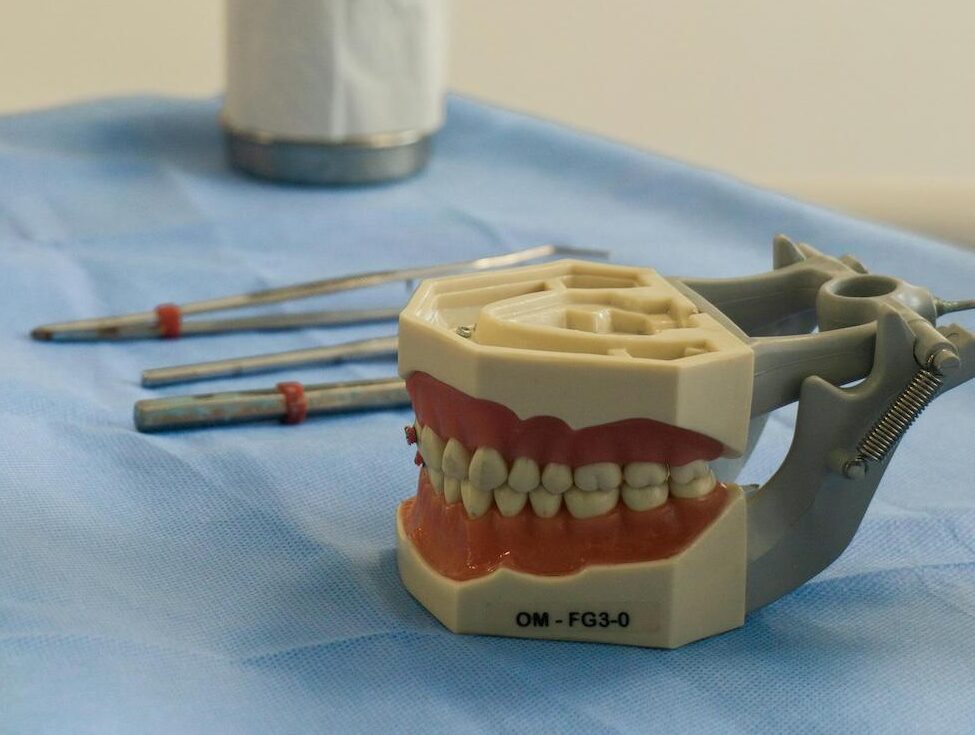
Practicing on a loose typodont held in your hand does not prepare you for the restricted access of a manikin. Mount your typodont, use the same type your target school uses when you can, and practice with a finger rest and handpiece setup that feels like test day.
Mistake 1: Nicking the Adjacent Tooth
Damaging the neighboring tooth during a Class II preparation is one of the most feared errors. Programs treat it seriously because, clinically, a nicked tooth is a damaged tooth.
The fix: keep a protective shell. As our proximal box guide explains, extend the box while leaving a shell of tooth structure between your bur and the adjacent tooth. Thin the shell carefully with a strong finger rest, and finish the remaining walls with hand instruments instead of forcing the bur.
Mistake 2: Inconsistent Preparation Depth
Uneven or sloping floors are a common reason preps lose points. Eyeballing depth often leads to one side being deeper than the other.
The fix: measure, do not guess. Learn the dimensions of your burs so you can use them as a reference, and check depth with a probe before you commit to a cut. Keep the bur aligned with the long axis of the tooth to get a flat, even floor. Use the depth values your program specifies.
Mistake 3: A Rough or Irregular Gingival Floor
A jagged gingival floor or leftover enamel lips can cost you points. The high-speed handpiece is for reduction; refinement usually comes from hand instruments.
The fix: finish with hand instruments. Once the box is established, smooth the gingival floor and walls with instruments such as a gingival margin trimmer and remove any unsupported enamel. Floor widths and bevel requirements vary between schools, so match the criteria your program gives you.
Mistake 4: Over-Tapered or Divergent Walls
Walls that taper too much weaken the remaining tooth, while divergent walls fail retention. Leaning the bur against a wall is a frequent cause.
The fix: control your angulation. Hold the handpiece steady and aligned with the long axis of the tooth instead of tilting it. Stop regularly, dry the tooth, and inspect the preparation from the occlusal view to check your walls before going further.
Mistake 5: Panicking After a Small Error
The last mistake is psychological. Many candidates react to a minor slip by over-preparing to “fix” it, removing tooth structure they cannot get back.
The fix: stay calm and think clinically. If you make an error, stop and decide on the most conservative way forward. If your program asks for a self-assessment, describe what happened honestly and how you would manage it with a patient. That shows judgment.
Why Bench Test Criteria Differ by Program
There is no single standard for how to pass dental bench test exercises. Programs choose different procedures, typodonts, and grading criteria. Learn more in why programs have such different bench tests, and check program details in the ADEA CAAPID program finder.
Conclusion: How to Pass Dental Bench Test Exercises Systematically
Learning how to pass dental bench test exercises is about being systematic, not perfect. Fix your ergonomics, protect adjacent teeth, measure depth, refine with hand instruments, control your angulation, and stay calm when something goes wrong.
If you want structured practice and expert feedback, explore Bench Test Mastery or request free bench test prep feedback.