Preparing for an MMI dental school interview requires a very different strategy than preparing for a traditional interview. As the dental school admissions landscape continues to evolve for the 2026 cycle, many programs now use Multiple Mini Interview (MMI) and Problem-Based Learning (PBL) formats to assess candidates beyond grades and test scores.
Part 1: The Multiple Mini Interview (MMI)
MMI Dental School Interview Format Explained
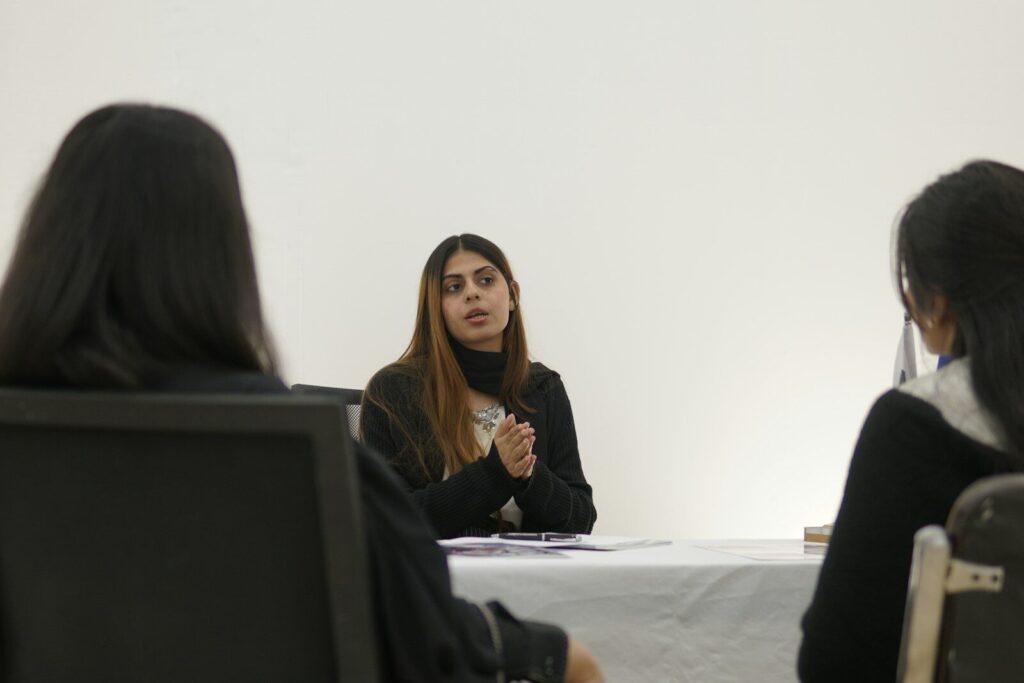
Origin and Purpose: Developed at McMaster University in 2002, the MMI was designed to mitigate “interviewer bias”—the phenomenon where a single interviewer’s subjective preference can unfairly weight an applicant’s entire profile. By rotating through 6–10 short stations, your final score is an aggregate of multiple independent evaluations, providing a more reliable “stress test” of your interpersonal and ethical reflexes.
Station Type Breakdown
- Ethical Dilemmas: Scenarios involving patient autonomy, confidentiality, or resource allocation. Example: A patient refuses life-saving treatment due to a misunderstanding of the procedure.
- Situational Judgment: Assessing how you handle workplace conflict or peer pressure. Example: You witness a classmate using unauthorized materials during a lab practical.
- Role-Play: Interacting with an actor (often a “standardized patient”) to assess empathy and de-escalation skills.
- Collaboration/Teamwork: A two-person station where one applicant must give instructions to another to complete a task (e.g., drawing a shape or building a structure) without seeing their workspace.
- Data Interpretation: Analyzing a clinical study or public health graph to assess critical thinking under pressure.
Advanced Tips for 2026 MMI Success
Successful MMI dental school interview preparation involves practicing ethical scenarios, communication exercises, and structured responses under timed conditions. The more exposure you have to different station formats, the more comfortable you will feel on interview day.
- Verbalize the “Gray Area”: Never jump to a conclusion. Start by saying, “This is a complex situation with several stakeholders…”
- The 2nd Person Perspective: In role-play, explicitly validate the other person’s emotions. “I can see you’re frustrated, and I want to understand why.”
- Clinical Benchmarking: Relate your answers to the ADA Code of Ethics (Autonomy, Beneficence, Non-maleficence, Justice, and Veracity).
- Master the “Reading Time”: Use the 2 minutes outside the door to map your three strongest points. Do not script; outline.
- Manage the “Mid-Station Pivot”: If an interviewer pushes back with a “What if…?”, do not be afraid to adjust your stance based on new information. This shows cognitive flexibility.
While we’re not sure, based upon articles from The Successful Match and reports from Polished Tooth, we believe that the following dental programs utilize MMI to some degree: Indiana University, Rutgers, and University of Minnesota.
Recommended Showcase: MMI Mastery

The Multiple Mini Interview (MMI) for Dental School Admissions
If you’re heading to a school that uses MMI, this is the definitive guide. It breaks down dozens of scenarios and provides the framework you need to answer with confidence. Check it out on Amazon here.
Part 2: The PBL (Problem-Based Learning) Interview
PBL vs. MMI Dental School Interview: Key Differences
The Curriculum Mirror: Institutions like USC (Herman Ostrow) use PBL not just as an interview tool, but as their primary teaching philosophy. In a PBL interview, you are placed in a group with 5–8 other applicants and given a clinical case. You are not being tested on your dental knowledge, but on how you learn within a group.
Strategies for the “Information Lookup” Phase
Most PBL interviews include a phase where you identify what you don’t know. Success here looks like:
- Identifying “Learning Issues”: Propose specific questions. Instead of “Let’s look up diabetes,” say, “We need to understand how Type II Diabetes affects periodontal healing rates.”
- Synthesis over Dominance: Use phrases like, “That’s a great point, Sarah. How does that connect to the patient’s chief complaint?”
Part 3: 2026 Cycle School Format Map
One of the most important aspects of MMI dental school interview preparation is understanding which interview format each school uses before you receive an invitation.
| School | Primary Format | Notes |
|---|---|---|
| University of Michigan | MMI | Strictly timed; focuses heavily on situational judgment. |
| Ohio State (OSU) | MMI | Multi-station approach for non-cognitive traits. |
| A.T. Still (ASDOH) | MMI | Emphasis on public health and community service ethics. |
| Roseman University | MMI / Group | Unique hybrid; assesses teamwork in clinical simulations. |
| USC (Ostrow) | Mandatory PBL | Two-day process; critical for assessment of fit. |
| Univ. of Pittsburgh | PBL Discussion | 45-minute group-based case study. |
| UCSF | Traditional | Closed-file; competency-based (two 1-on-1 sessions). |
| Univ. at Buffalo | Traditional | Open-file; personal connection and manual dexterity focus. |
Conclusion: The Acceptance Letter is Within Reach
Whether your upcoming MMI dental school interview is at Michigan or your PBL session is at USC, the objective remains the same: demonstrate the professional maturity, communication skills, and clinical judgment expected of a future dentist.
Ready to master your interview? Join our All-In Program for personalized mock interviews and MMI/PBL coaching sessions tailored for international dentists.