If you are an international dentist preparing for your CAAPID application or an upcoming dental school interview, there is one question you know is coming. It’s the question that forms the bedrock of your personal statement and the opening gambit of almost every interview:
“Why dentistry?”
(or “What made you become a dentist?). The Why Dentistry? question is one of the most important questions to prepare for before your dental school interview.
On the surface, it seems easy – just tell them your story, right? After all, you’ve dedicated years of your life to this profession. But here is the problem: 90% of applicants give the exact same answer. They talk about wanting to “help people,” having a “passion for healthcare,” or wanting to “see patients smile.”
While these sentiments are noble, in the highly competitive world of US dental school admissions, noble is not enough. Admissions committees aren’t looking for the most “passionate” applicant—they are looking for the most prepared and insightful future colleague. To stand out, you need to go beyond the cliché and demonstrate a profound understanding of what dentistry actually is in the modern era.
Some Different Options for a More Sophisticated “Why Dentistry?” Answer
A compelling response doesn’t just list these cliche reasons; it constructs a multi-dimensional portrait of the profession. I like to break this down into different motivations of dentistry. When you incorporate these into your response, you show the admission committees that you understand the breadth and depth of the career you are entering.
Motivation #1: Science and Analytical Rigor
Dentistry is, first and foremost, a branch of medicine. It requires a deep understanding of biology, chemistry, and pathology. Instead of saying you like “science,” talk about the analytical challenge of diagnosis. Explain how you enjoy being a “detective of the mouth,” where you must synthesize clinical findings, radiographic data, and patient history to solve complex problems.
In the modern clinical setting, this pillar also involves evidence-based decision making. You aren’t just following a recipe; you are analyzing recent literature to determine the best material or procedure for a specific patient’s unique biological environment. This shows you are a lifelong learner who values the ‘doctor’ in ‘doctor of dental surgery.’
Motivation #2: Nurturing and Maintaining Patients Over the Long Run
Unlike an ER doctor who might see a patient once, a dentist often sees a patient for decades. We treat families across generations. When you talk about “helping people,” frame it through the lens of longitudinal care. You aren’t just fixing a tooth; you are managing a patient’s health over a lifetime and building a relationship based on trust and empathy.
This motivation also touches on the concept of community leadership. A dentist often serves as a pillar of their local community, providing education and preventative care that can change the health trajectory of an entire neighborhood. Discussing your desire to serve underserved populations through this long-term relationship model is far more powerful than a generic “I want to help.”
Motivation #3: Leadership and Team Management
A dentist is the leader of a clinical team. You manage dental assistants, hygienists, and office staff. Discuss your desire to lead a team toward a common goal of excellence in patient care. This shows maturity and an understanding of the business and social dynamics of a dental practice.
Effective leadership in dentistry also involves patient advocacy. You are the one who explains complex treatments, calms anxieties, and ensures the entire team is aligned with the patient’s best interests. This is a “soft skill” that programs value immensely in advanced standing candidates.
Motivation #4: Manual Precision and Perhaps Aesthetics
This is where dentistry diverges from most other medical fields. We are surgeons who work in microns. We are also artists who must understand color, form, and symmetry. This is your opportunity to mention your manual dexterity. If you have a hobby like ceramics, miniature painting, or playing a musical instrument, this is a place to bridge that personal passion to your professional choice. You aren’t just a doctor; you are a micro-sculptor. Be careful, however, as this can tend to become overused in responses too and thus becomes another trap of the cliche.
The “Aesthetics” pillar is what makes dentistry uniquely satisfying for many, but not all. Again, be careful of using this one unless you really mean it and it’s really important to you. The ability to restore a patient’s smile not just functionally, but aesthetically, requires a level of focus and hand-eye coordination that is rarely found in other professions. By highlighting this, you confirm your aptitude for the technical rigors of the bench test and the clinic.
Clinical Depth: The Oral-Systemic Link (2026 Perspective)
In the 2026–2027 cycle, “old school” dentistry is out. “Physician of the Mouth” is in. To truly impress the program, you must demonstrate that you understand the Oral-Systemic Link.
Recent research (2024–2026) has further solidified the connection between chronic periodontal inflammation and systemic conditions like Type 2 Diabetes, Alzheimer’s Disease, and Cardiovascular health. Mentioning how a dentist can be the first line of defense in identifying systemic issues—or how managing oral health can improve a patient’s overall glycemic control—shows a level of clinical sophistication that few applicants possess. You aren’t just “fixing smiles”; you are improving lives at a systemic level.
For example, you might discuss the “Physician of the Mouth” concept—where you acknowledge your role in screening for oral cancers or nutritional deficiencies that manifest first in the oral cavity. This shows you view the mouth not as an isolated box, but as a window into the patient’s entire wellbeing.
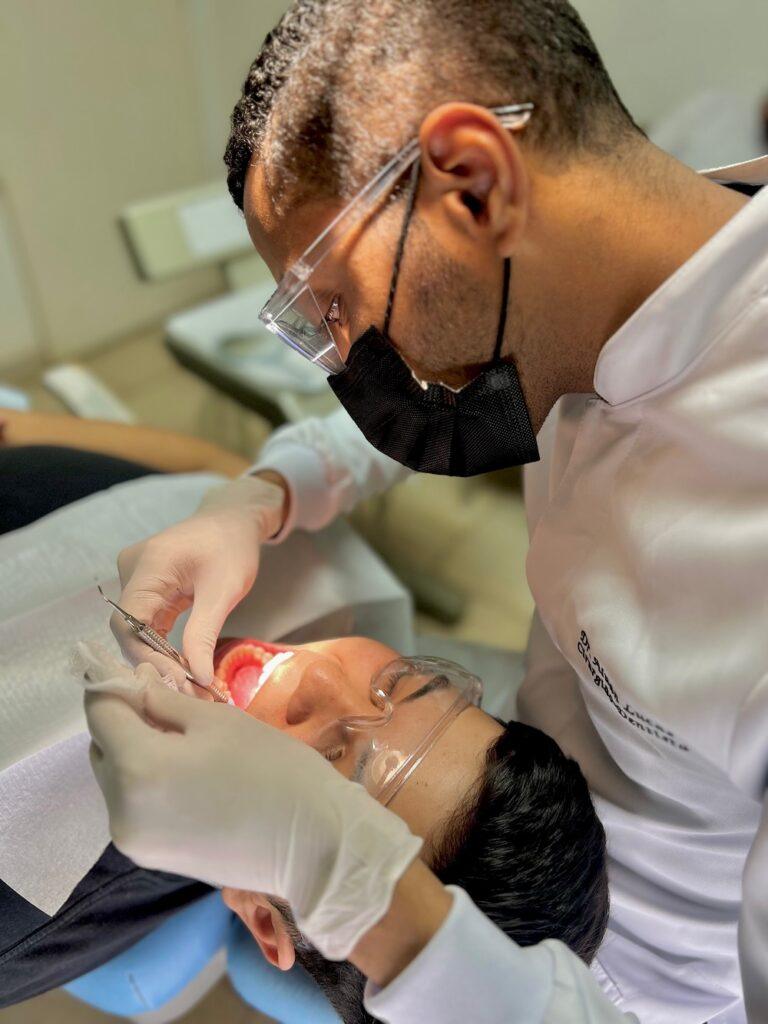
Proof of Manual Dexterity: Beyond the Classroom
The “Artistry” pillar needs proof. For international dentists, this is critical because US schools need to know your hands are ready for the bench test and the clinic. If your “Why Dentistry?” answer includes your love for working with your hands, be specific:
- Ceramics/Pottery: Discusses control of pressure, moisture, and form. Mentioning specific techniques like “wheel-throwing” or “fine detailing” adds authenticity.
- Miniature Painting (e.g., Warhammer): Demonstrates extreme precision and color theory. Talk about working under a magnifying glass—just like using loupes!
- Musical Instruments (Piano/Violin): Shows finger independence and motor control. The “muscle memory” developed over years of practice is directly transferable to dental handpieces.
- Jewelry Making: Reflects the precision of working with casting and fine materials, very similar to crown and bridge work.
These aren’t just “hobbies”—they are transferable skills that validate your aptitude for the delicate procedures required in dental school.
Embracing Innovation: Digital Dentistry and AI
Finally, a modern answer must acknowledge where the field is going. Digital dentistry—including CAD/CAM (like CEREC), 3D printing, and AI-assisted diagnostics—is no longer the “future”; it is the present.
Discussing your excitement for integrating these technologies to provide “Evidence-Based Compassion” shows you are a forward-thinking professional. You want to use technology to increase precision, decrease patient discomfort, and achieve better clinical outcomes. Schools like Penn, UCSF, and UOP are leading the way in this integration—mentioning your interest in their specific digital curricula can be a huge bonus.
Common Mistakes to Avoid in Your Answer
Even with a strong core, several common pitfalls can derail your response. Here are three to watch out for:
1. The “Lack of Specificity” Trap
Saying you chose dentistry because it’s “interesting” tells the admissions committee nothing about your Why Dentistry? motivation. Be specific. Instead, say, “I am fascinated by the biomechanics of prosthetic design” or “I am driven by the intersection of immunology and periodontal health.” Specificity signals expertise.
2. Neglecting the “Artistry” Component
Many international dentists focus solely on their clinical experience. While important, US schools value the “whole person.” If you ignore the creative or manual side of the profession, you miss an opportunity to show your unique flair and aptitude for the “hand skills” required for success.
3. The “Past Without a Future” Mistake
Don’t just talk about why you became a dentist in your home country. Talk about why you want to be a US dentist in the future. Connect your past experiences to your goals for practicing in the US, whether that’s serving a specific immigrant population or engaging in US-based clinical research.
The Secret Sauce: The CAR Method
Whether in your essay or your interview, never just state a trait—prove it using the CAR Method (Crisis, Action, Result). I’ve written more about the CAR method, and how to answer complex behavior interview questions here.
Instead of saying, “I am resilient,” tell a story about a complex extraction (Crisis) that didn’t go as planned, the Action you took to ensure patient safety, and the Result (a healed patient and a new surgical protocol). This transforms your “Why Dentistry?” answer from a list of adjectives into a compelling narrative of professional growth.
Conclusion
Mastering the “Why Dentistry?” question is about demonstrating that you are a thinking dentist. By grounding your answer in the Four Pillars, showing clinical depth via the oral-systemic link, and proving your manual artistry with real-world examples, you move from being “just another applicant” to being a “future colleague.”
Are you ready to refine your “Why Dentistry?” answer for this cycle? Our team at IDC specializes in helping international dentists craft authentic, pro-level personal statements and interview responses. Don’t leave your future to chance—let’s build your success together.
Leave a comment below with your own motivation for dentistry, or share this guide with a fellow applicant!